Landlords
13 April 2026
A New Chapter for the Private Rented Sector — What the Renters' Rights Act Means for You and Your Tenants
Share Blog
Change can feel unsettling, particularly when it arrives all at once. But the Renters' Rights Act — now in force from 1 May 2026 — is best understood not as a threat to landlords, but as a new framework for a more professional, relationship-centred rental market. Here's what's changed, what you need to do, and why there's good reason for confidence.
A fundamental shift — and why it's more manageable than it sounds
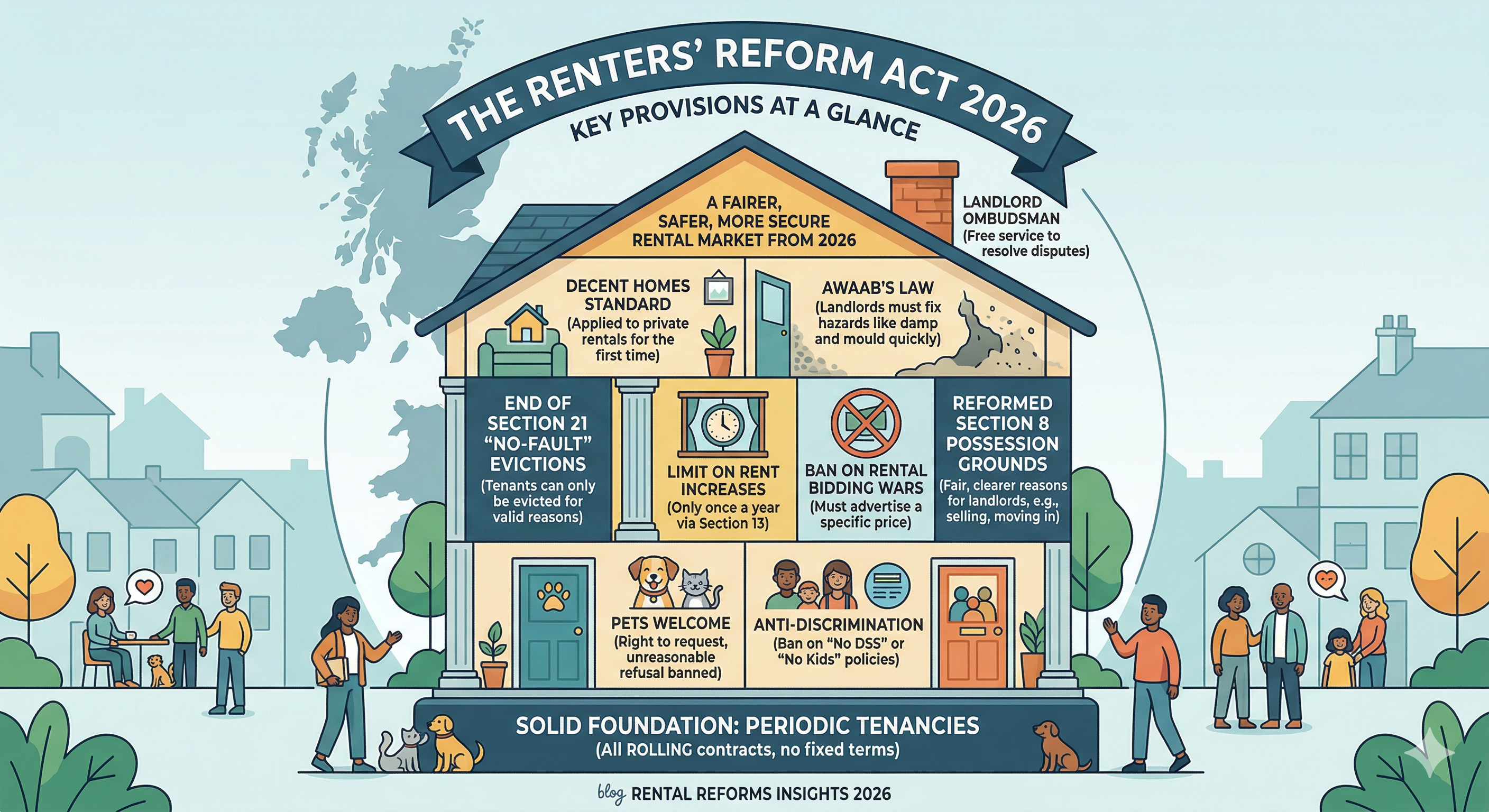
The headline change is the abolition of the Assured Shorthold Tenancy (AST). Every residential tenancy in England has now automatically converted to an Assured Periodic Tenancy (APT) — a rolling, open-ended agreement rather than one with a fixed expiry date.
For many landlords, this is already how tenancies worked in practice. The fixed-term rolled over, tenants stayed, and the relationship simply continued. What changes now is that this is the formal structure from the outset — and it comes with clear, consistent rules for both sides.
The good news? You don't need to issue new tenancy agreements for existing lets. The conversion has happened automatically. What you do need to do is ensure your tenants receive the right information and that you understand the new rules.
What tenants can and can't do now
Tenants can now end a tenancy at any time by giving two months' notice. This is actually a longer notice period than applied to many previous ASTs — giving you more runway to find new tenants and market the property properly. Good tenants in properties they love are no more likely to leave than before; they simply have more flexibility if their circumstances change.
Tenants cannot, under any circumstances, be evicted without legal grounds. Section 21 is gone — and that's a reflection of what good landlords already knew: the best tenancy relationships are built on mutual respect, fair rents, and well-maintained properties, not on the threat of a no-fault eviction notice.
Rent reviews — fairness and transparency
Gone are the days of contractual rent review clauses. From 1 May 2026, rent can only be increased once a year via a formal Section 13 notice, giving tenants two months to plan — or to challenge the increase at the First-tier Tribunal if they believe it's above market rate.
This is a more structured process, but it is a fair one. Landlords who keep rents competitive with local market rates are unlikely to face challenges. And because the Tribunal cannot increase a proposed rent beyond what the landlord has already requested, there is no risk in making a reasonable proposal.
Regular, transparent rent reviews — communicated clearly to tenants — support better long-term relationships and reduce the likelihood of disputes.
Pets — a welcome clarity
Tenants now have a formal right to request permission to keep a pet, and landlords cannot unreasonably refuse. This replaces the common — and often frustrating — blanket ban that deterred many good tenants.
The new rules allow landlords to require pet insurance as a condition of consent, which goes some way to addressing the concerns around potential damage. And landlords retain the right to refuse on legitimate grounds, such as lease restrictions or property suitability.
Opening your property to pet owners increases your potential tenant pool. And tenants with pets often value the stability of a long-term home more than most.
One important deadline — the Information Sheet
Before we get to the bigger picture, there is one practical task that requires your attention immediately.
The Government has published the Renters' Rights Act Information Sheet 2026 — a short, four-page document explaining the new rules to tenants. You are legally required to ensure every named tenant on an existing written tenancy receives a copy by 31 May 2026.
This isn't bureaucracy for its own sake — it's an opportunity to communicate clearly and openly with your tenants at a time of significant change. Done well, it can actually strengthen the relationship.
The rules around how to serve it:
Download the exact PDF from GOV.UK — no other version is valid
Send the document itself (digitally or in print) — not a link to it
Every named tenant must receive their own copy
Keep a clear record that you've done so
If a letting agent manages your property, they must also serve it — even if you have already done so
If your tenancy was entirely verbal, you'll need to provide a written statement of key terms instead
The deadline is 31 May 2026. Miss it, and you could face a fine of up to £7,000. Serve it, and you're compliant, transparent, and ahead of the game.
The bigger picture — a more professional market
The Renters' Rights Act is the most significant reform to private renting since 1988. It introduces greater security for tenants, more structured rules for landlords, and a more level, professional playing field for everyone.
A Private Rented Sector Database and Landlord Ombudsman are coming later in 2026 as part of Phase 2. These will help raise standards across the board — which ultimately benefits landlords who are already doing things right, by making the difference between responsible and irresponsible landlords more visible.
The private rental market in England remains one of the most in-demand housing sectors in the country. Good properties, let at fair rents by engaged, compliant landlords, will continue to attract excellent tenants. The framework has changed — but the fundamentals of good letting have not.
Approach this new chapter with clarity, good record-keeping, and open communication with your tenants, and you'll be well placed to thrive in it.
If you'd like support navigating the new legislation, reviewing your tenancy documentation, or ensuring your properties are fully compliant, speak to our team today.
Note: This blog post is for general information purposes and does not constitute legal advice. For guidance specific to your circumstances, please seek professional legal or letting advice.